Try the Hitech Billsoft Software today and grow your business
Join Millions of Business Owners already saving time and
money with Hitech Billsoft.
GST compliance is no longer limited to filing returns. Businesses must also ensure accurate invoicing, proper Input Tax Credit (ITC) reconciliation, timely return filing, e-Way Bill compliance, tax payment, vendor reconciliation, and proper record maintenance. Missing even a small compliance requirement can lead to penalties, blocked ITC claims, delayed refunds, or GST notices.
As GST systems continue becoming more digitized during FY 2026–27, MSMEs need a structured compliance process to reduce risks and maintain smooth operations. A comprehensive GST compliance checklist helps businesses stay organized, avoid costly mistakes, and improve overall financial discipline.
This guide covers the key GST compliance requirements every MSME should monitor throughout FY 2026–27, including invoice compliance, GST registration, Input Tax Credit management, return filing, e-Way Bills, annual reviews, and best practices for maintaining GST compliance.
Many businesses still consider GST compliance to be only about filing returns. However, GST compliance directly affects business cash flow, vendor relationships, audit preparedness, refund processing, and customer confidence.
A disciplined GST compliance process enables businesses to avoid interest and penalties, correctly claim eligible ITC, improve accounting accuracy, reduce audit risks, and maintain uninterrupted business operations.
Before reviewing individual compliance responsibilities, every MSME should understand the major GST activities that require regular monitoring throughout the financial year. Maintaining a compliance calendar helps businesses avoid missed deadlines, improve record management, and reduce the risk of penalties.
| Compliance Area | Frequency |
|---|---|
| GST Invoice Issuance | Daily |
| Purchase Recording | Daily |
| e-Way Bill Generation | As Required |
| Input Tax Credit Reconciliation | Monthly |
| GST Return Filing | Monthly / Quarterly |
| GST Tax Payment | Monthly |
| Vendor Reconciliation | Monthly |
| Annual GST Review | Yearly |
Maintaining a structured compliance calendar significantly reduces missed deadlines and helps businesses stay prepared for audits and regulatory changes.
GST compliance begins with ensuring that registration details remain accurate and updated. Incorrect business information may create return filing issues, invoice mismatches, and unnecessary notices.
Businesses should periodically verify the following registration details:
Review GST registration details at regular intervals and update any changes immediately through the GST portal to avoid future compliance issues.
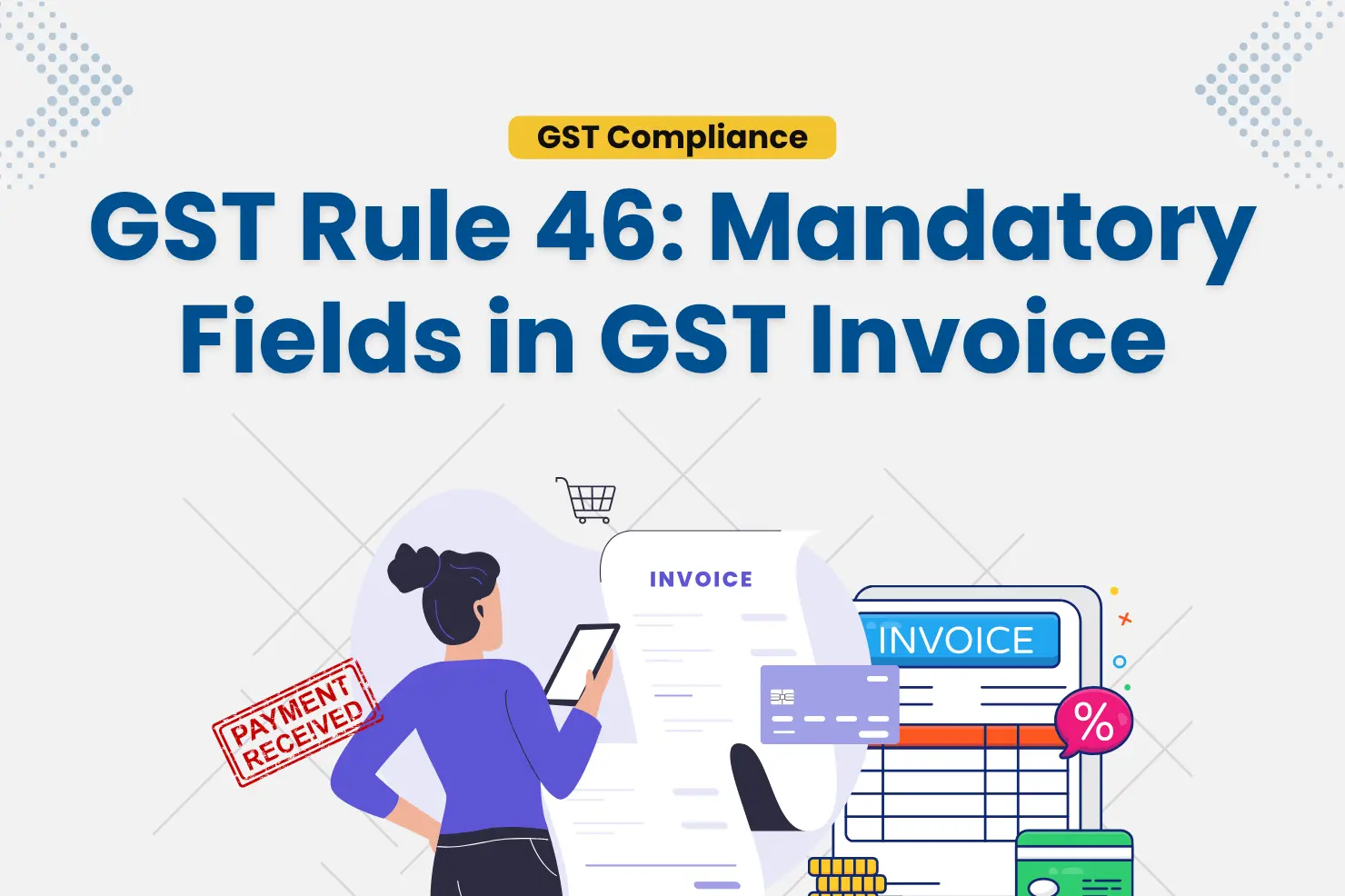
Invoice-related mistakes remain one of the leading causes of GST notices, Input Tax Credit mismatches, and reconciliation issues. Every business should establish a standardized invoicing process to ensure every GST invoice satisfies Rule 46 requirements.
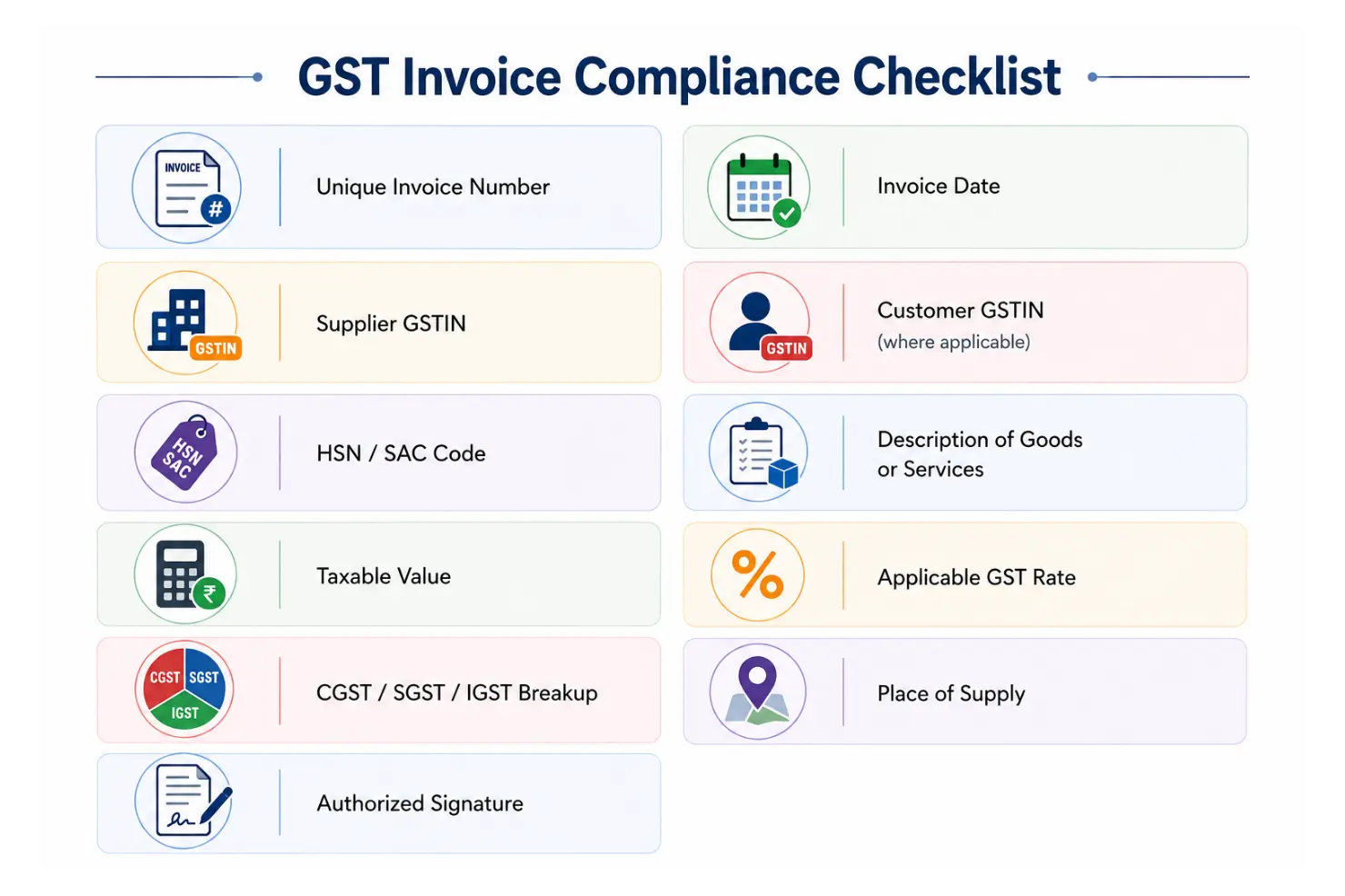
Every GST invoice should include the following mandatory information:
| Invoice Requirement | Verification |
|---|---|
| Unique Invoice Number | ✓ |
| Correct GSTIN | ✓ |
| Correct GST Rate | ✓ |
| HSN / SAC Code | ✓ |
| Tax Calculation | ✓ |
| Customer Details | ✓ |
| Invoice Date | ✓ |
Accurate GST invoicing forms the foundation of smooth Input Tax Credit reconciliation and helps businesses avoid unnecessary compliance issues.
Input Tax Credit (ITC) is one of the biggest financial benefits available under GST. However, many MSMEs lose eligible credits because of delayed reconciliations, vendor non-compliance, incorrect invoices, or inaccurate record maintenance.
A disciplined monthly ITC review helps businesses maximize eligible credits while minimizing disputes and notices.
Regular reconciliation helps businesses prevent blocked Input Tax Credit, improve working capital, reduce GST notices, and maintain audit readiness. Correcting issues every month is significantly easier than resolving them at the end of the financial year.
GST return filing remains one of the most important recurring compliance responsibilities for MSMEs. Before filing returns, businesses should ensure that every financial record has been properly verified and reconciled.
Preparing GST returns using verified data reduces errors, avoids notices, and improves filing accuracy.
| Return Preparation Task | Status |
|---|---|
| Sales Reconciliation | ✓ |
| Purchase Reconciliation | ✓ |
| ITC Validation | ✓ |
| GST Liability Verification | ✓ |
| Credit Note Review | ✓ |
| Debit Note Review | ✓ |
| Tax Payment Confirmation | ✓ |
Following a structured return filing process ensures accurate GST reporting, improves compliance, and minimizes the likelihood of notices resulting from mismatched or incomplete information.
Businesses transporting goods beyond the prescribed threshold must generate e-Way Bills whenever applicable. Proper e-Way Bill compliance helps avoid delays during transportation and reduces the risk of penalties during inspections.
In addition to monthly and quarterly compliance activities, businesses should conduct a comprehensive annual GST review. An annual review helps identify compliance gaps, rectify reporting errors, improve documentation, and prepare for future audits.
| Annual Review Activity | Frequency |
|---|---|
| Annual Turnover Verification | Yearly |
| Complete GST Reconciliation | Yearly |
| ITC Eligibility Review | Yearly |
| Vendor Compliance Assessment | Yearly |
| Business Record Verification | Yearly |
| Document Archiving | Yearly |
Proper documentation is essential for GST compliance. Businesses should maintain organized records to support return filing, ITC claims, audits, inspections, and future reconciliations.
Maintaining digital records through GST-compliant billing software simplifies document management, improves reporting accuracy, and makes audit preparation significantly easier.
Maintaining GST compliance is easier when businesses adopt consistent processes throughout the year instead of treating compliance as a month-end activity.
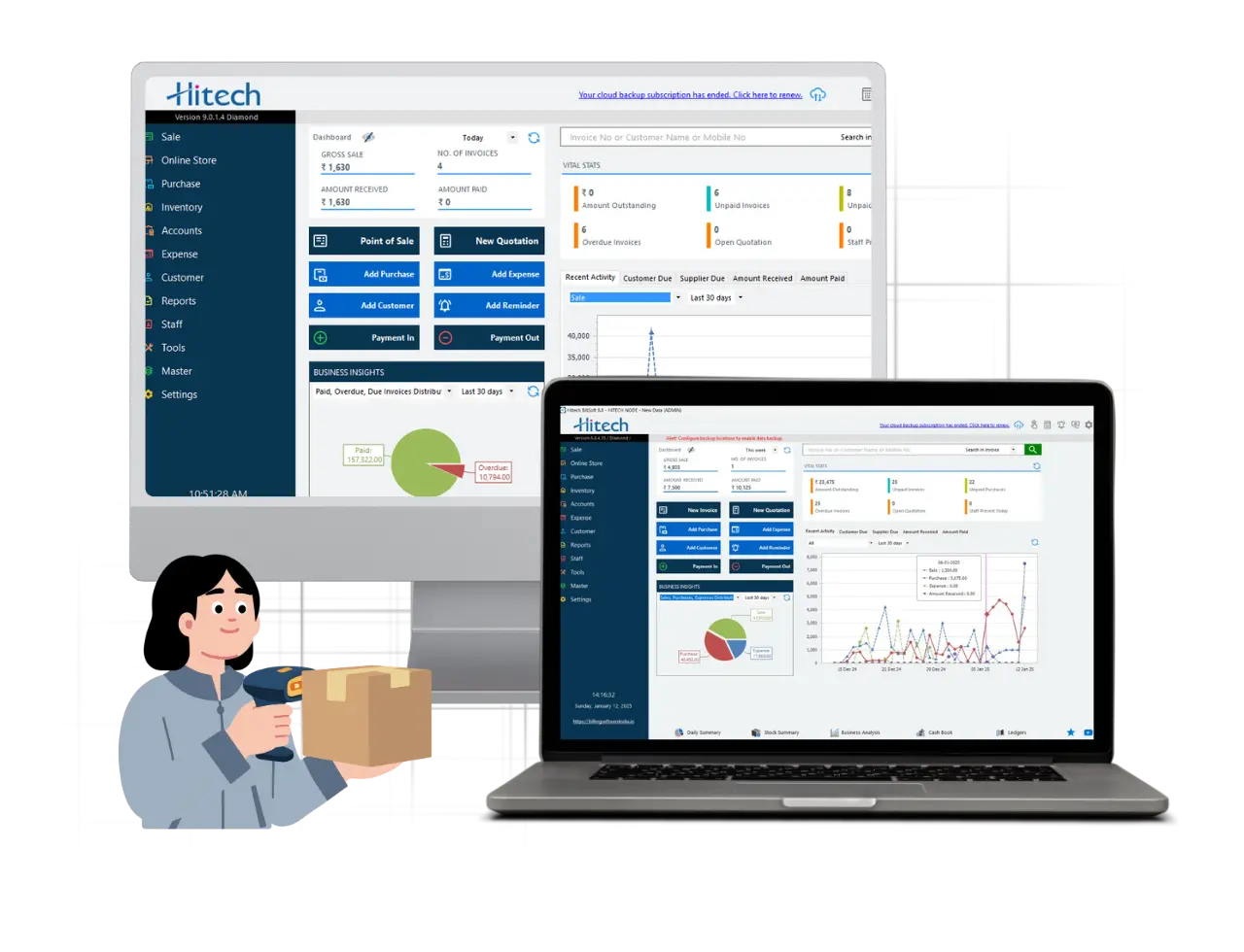
Modern GST billing software automates invoice generation, tax calculation, GST reports, e-Way Bill support, reconciliation, and return preparation. Automation minimizes manual errors and helps businesses stay compliant throughout the financial year.
GST compliance in FY 2026–27 extends far beyond filing returns. Businesses must maintain accurate invoices, reconcile Input Tax Credit, monitor vendor compliance, generate e-Way Bills where required, preserve financial records, and conduct regular compliance reviews.
Following a structured GST compliance checklist enables MSMEs to reduce penalties, improve financial accuracy, strengthen audit readiness, and maintain uninterrupted business operations. Leveraging GST-compliant billing software further simplifies compliance by automating routine processes and reducing the likelihood of manual errors.
Join Millions of Business Owners already saving time and
money with Hitech Billsoft.