Try the Hitech Billsoft Software today and grow your business
Join Millions of Business Owners already saving time and
money with Hitech Billsoft.
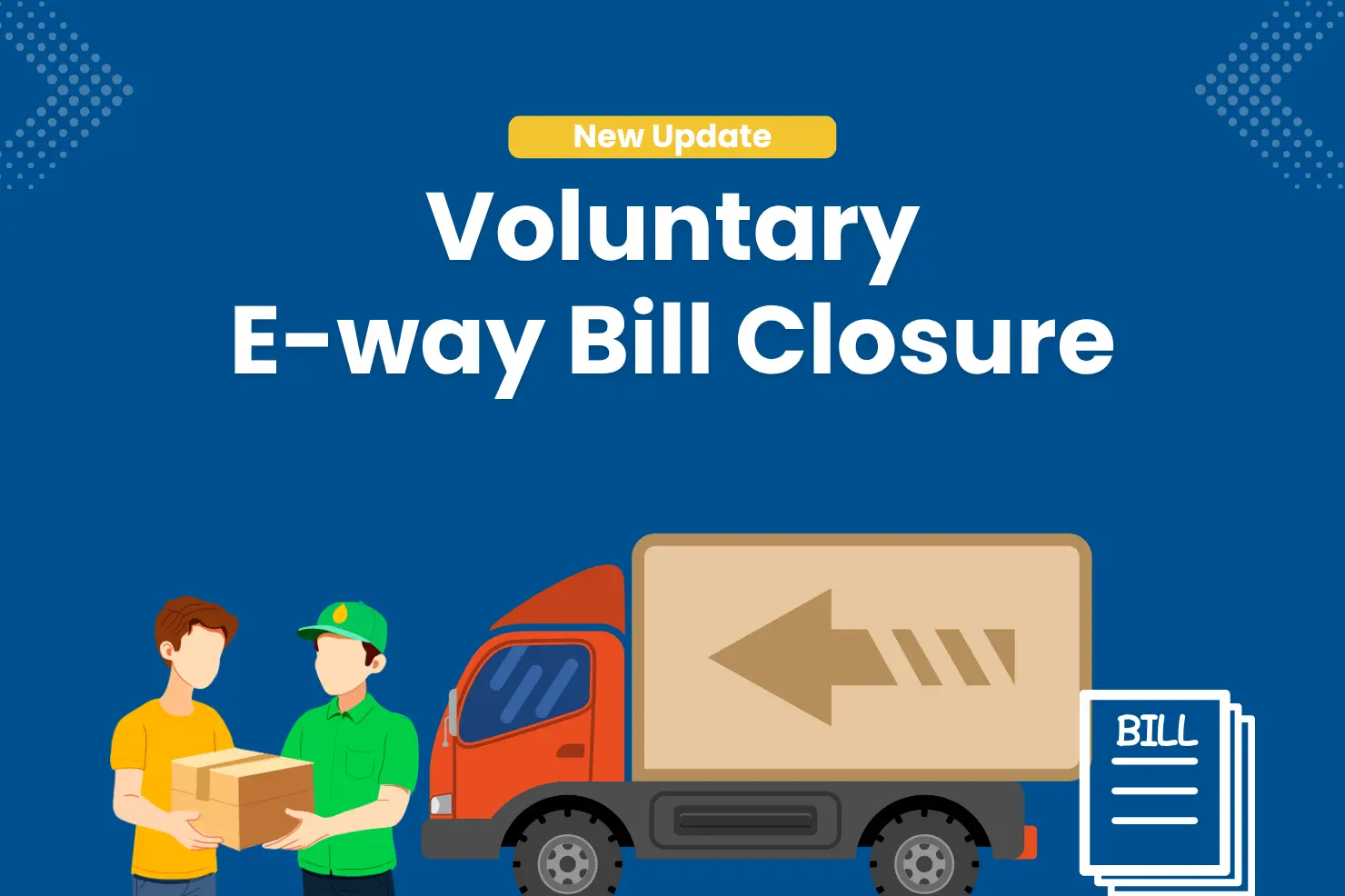
The GSTN has introduced the Voluntary e-Way Bill Closure Facility to help businesses manage inactive or unused e-Way Bills more effectively.
The Voluntary e-Way Bill Closure Facility allows taxpayers to voluntarily close an e-Way Bill when the transportation process has stopped, changed, or is no longer valid.
Now, businesses can voluntarily close such e-Way Bills instead of leaving unnecessary records open, creating better transparency in goods movement and helping maintain cleaner GST records.
Voluntary e-way bill closure facility, is a new feature introduced by the GST authorities to address practical business challenges. Now, businesses can voluntarily close an e-Way Bill when the good are not transported.
Earlier, the e-way bill remained in the system even if the goods were not transported, which created issues and confusions. Businesses faced multiple situations where the goods were not transported due to various reasons, such as order cancellation, vehicle breakdown, or some postponement.
The voluntary e-way bill closure facility was introduced to address the challenges businesses faced when products were not actually transported after the bill was generated.
Let's take a situation
Let's take a Wholesaler in Surat, who has to send order of 5000 sarees to a
retailer in Nagpur. Everything was right on schedule, the order was ready,
transport contacted and a new e-way bill generated. But, a day before delivery
some issue came up like buyer postpones delivery, or maybe some other reason
that the order is cancelled.
Now, what will happen? The e-way bill will be present in the system, even when
the order was not completed. The business owner will have to keep a note of this bill
for future filling and other compliance tasks.
To solve such practical business problems, GST authorities introduced the Voluntary e-Way Bill Closure Facility. To ensure if the e-way bill is no -longer valid, business owner can close the bill voluntarily. This makes it easier for businesses to manage their business records and maintain accuracy.
Read more: GST Compliance Checklist for MSMEs - FY 2026-27
| Business Type | Common Issues |
|---|---|
| Traders | Traders often need to postpone orders, deal with delays in transportation, or accommodate last-minute changes requested by customers in the delivery schedule. |
| Wholesalers | Wholesalers frequently run into situations where stock runs out, buyers push back their delivery dates, or the dispatch itself has to be delayed. |
| Transporters | Transporters commonly deal with vehicles breaking down, shipments being cancelled, delays in pickup, or sudden changes to the planned route. |
| Exporters | Exporters can face hold-ups at the warehouse, issues with freight arrangements, delays at the port, or complications during customs clearance. |
| Manufacturers | Manufacturers may experience sudden changes to their dispatch plans, setbacks in production, or delivery timelines being pushed back. |
Many business owners get confused between cancellation and closure, but both of these are actually quite different from each other.
e-Way Bill cancellation is used when some wrong details have been entered while generating the e-Way Bill. For example, the GSTIN may be typed wrong, the invoice number may not match, or the transport details may be incorrect. In such cases, the purpose is simple: to cancel that e-Way Bill so the wrong information does not stay on record. Once cancelled, that particular e-Way Bill becomes invalid.
Voluntary e-Way Bill closure is used in a different situation altogether. Here, the e-Way Bill was generated correctly, but the goods movement did not actually happen. This can happen if the customer cancels the order, the delivery gets postponed, or the vehicle is not available at the last moment. In this case, there is no mistake to correct. The idea is only to update the records so that it shows the goods were never transported.
So, in simple words, cancellation is done to fix a mistake, and closure is done to inform that the planned movement of goods did not take place. Knowing this difference is important, because using the wrong option can create problems later and may also leave incorrect records in the GST system.
Related: Migrate from Excel Billing to GST Billing Software
Closing unused e-Way Bills helps avoid confusion during GST inspections and keeps transportation records clear, making cancelled dispatches easier to track during GST assessments, internal audits, and tax verification.
Businesses can use the voluntary e-Way Bill closure facility in the following situations:
The GST portal offers a built-in option that lets users voluntarily shut down an active e-Way Bill whenever the actual movement of goods does not take place.
Step 1: Sign in to the e-Way Bill portal and locate the Closing of e-Way Bills section from the available options.
Users who already have e-Way Bills on record can look up the relevant bill either by entering its e-Way Bill Number or by specifying the date on which it was originally generated.
Useful for businesses such as FMCG wholesalers, textile traders, hardware businesses, electronics distributors, manufacturers, and exporters.
Review active e-Way Bills regularly instead of leaving them open indefinitely. Close an e-Way Bill only when transportation has genuinely stopped, always verify shipment status with the transporter before initiating closure, and keep supporting documentation for cancelled dispatches to simplify GST audits.
The Voluntary e-Way Bill Closure Facility is a practical GST update that helps businesses manage situations where shipments are cancelled, delayed, or never take place. Instead of leaving inactive e-Way Bills open, businesses can now officially close them to maintain accurate transportation records.
Proper use of this facility improves GST compliance, reduces confusion during inspections, and helps businesses maintain transparent shipment records.
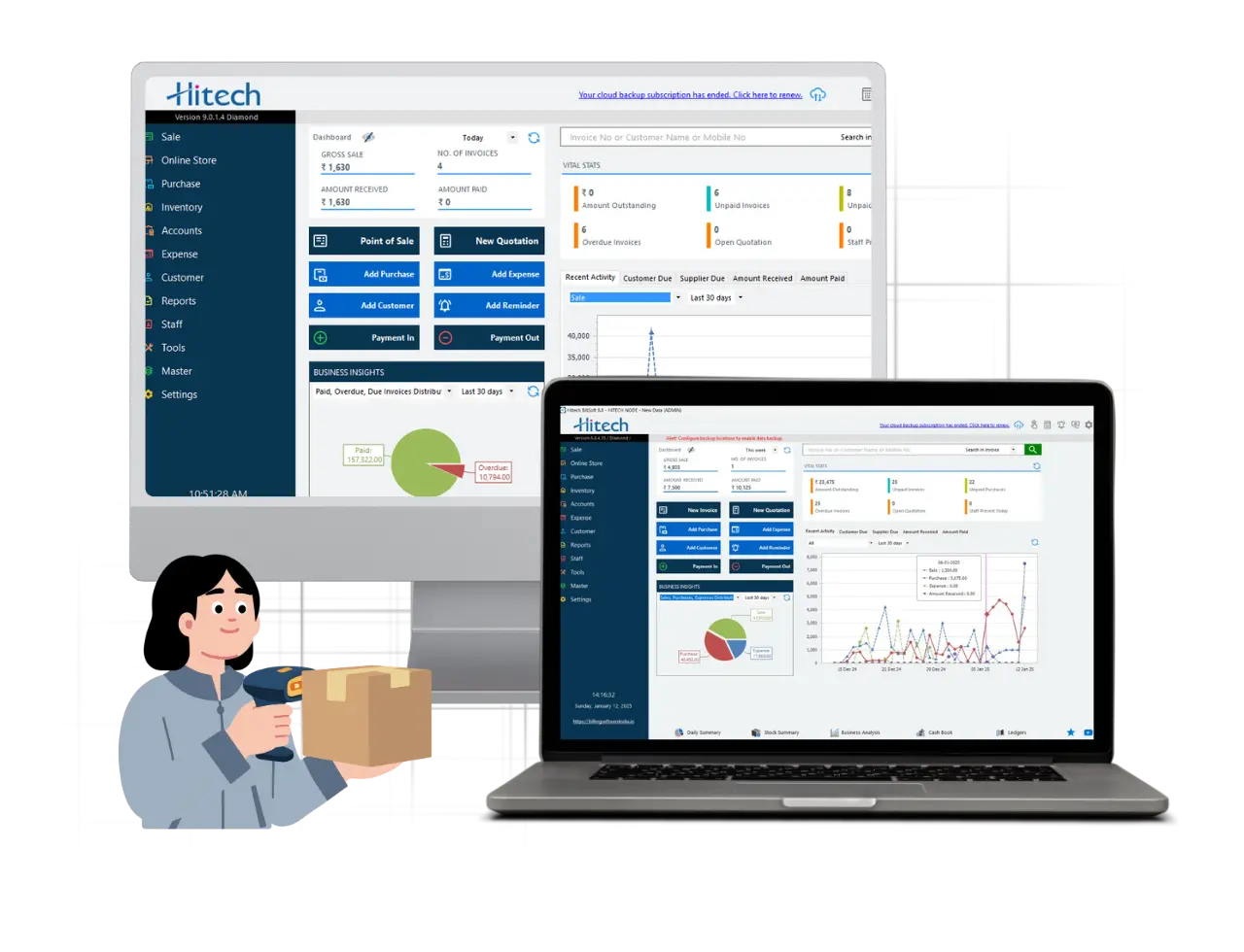
Businesses using GST invoicing software for e-Way Bill management can further simplify record keeping, monitor shipments efficiently, and stay compliant with the latest GST requirements.
Join Millions of Business Owners already saving time and
money with Hitech Billsoft.