Try the Hitech Billsoft Software today and grow your business
Join Millions of Business Owners already saving time and
money with Hitech Billsoft.
The event management industry in India has grown steadily, serving corporate conferences, exhibitions, trade fairs, weddings, product launches, and social events of every kind. As the sector expands, GST compliance has become just as important as the events themselves.
Understanding GST on event management services matters not only for staying compliant, but also for pricing services correctly, managing tax liability, and making the most of Input Tax Credit (ITC) benefits. Whether you run a small event planning agency or a large event management company, knowing the applicable GST rate, SAC code, invoicing rules, and ITC provisions can help you avoid costly mistakes.
This guide covers everything event management businesses need to know about GST in India in 2026.
Event management involves planning, organizing, coordinating, and executing events on behalf of clients - covering venue selection, decoration, logistics, entertainment arrangements, catering coordination, audiovisual setup, guest management, and post-event reporting. Under GST, these services are generally treated as taxable services.
Common examples include:
The applicable GST rate for event management services is generally 18%. This single rate applies consistently across the industry, regardless of the specific type of event being managed:
Applies uniformly to event management services, corporate event planning, exhibition management, conference management, wedding planning services, and trade show management.
When multiple services are bundled into a single event package, GST treatment depends on whether the supply qualifies as a composite or mixed supply. In most event management contracts, the principal supply is the event management service itself, keeping the overall GST rate at 18%.
GST classifies services using Service Accounting Codes (SAC). The commonly applicable code for event management services is SAC 998596, which generally covers services related to planning, organizing, promoting, and managing events, exhibitions, conventions, conferences, and similar activities. Businesses should verify the exact SAC code applicable to their services based on the nature of their operations and contracts.
Many event management companies provide end-to-end solutions rather than a single service, spanning:
Since these services are often provided together, GST treatment typically follows the principal supply concept.
Input Tax Credit is one of the most important GST benefits available to event management businesses. It allows businesses to claim credit for GST paid on purchases and expenses used for providing taxable services, and understanding eligible and ineligible credits can significantly impact profitability.
The following business-related expenses are generally ITC-eligible, provided they're supported by valid tax invoices:
Under Section 17(5) of the CGST Act, certain expenses don't qualify for ITC - including personal consumption expenses, club membership fees, personal travel and entertainment expenses, and certain employee-related benefits, which are restricted. Review these provisions carefully before claiming credit.
Food and catering during events is a common area of confusion. If catering is arranged through a third-party restaurant or caterer, GST treatment can vary based on the vendor's tax structure. Event management companies should separately evaluate catering invoices, vendor GST registrations, ITC eligibility, and composite supply implications, and keep proper documentation to support these claims.
Event management companies must obtain GST registration once their aggregate turnover exceeds the prescribed threshold. Businesses may also register voluntarily, even before crossing the threshold, to:
Every GST invoice for event services should include:
Errors in invoices can lead to compliance issues and ITC disputes, so it's worth double-checking every field before an invoice goes out.
The place of supply determines whether CGST + SGST or IGST applies, and depends on the event location, customer location, type of recipient, and nature of the service. This becomes especially important when services are provided across multiple states, so businesses handling large corporate events should pay close attention to these provisions.
Many event management companies face GST notices due to avoidable errors, including:
Regular compliance reviews can help minimize these risks.
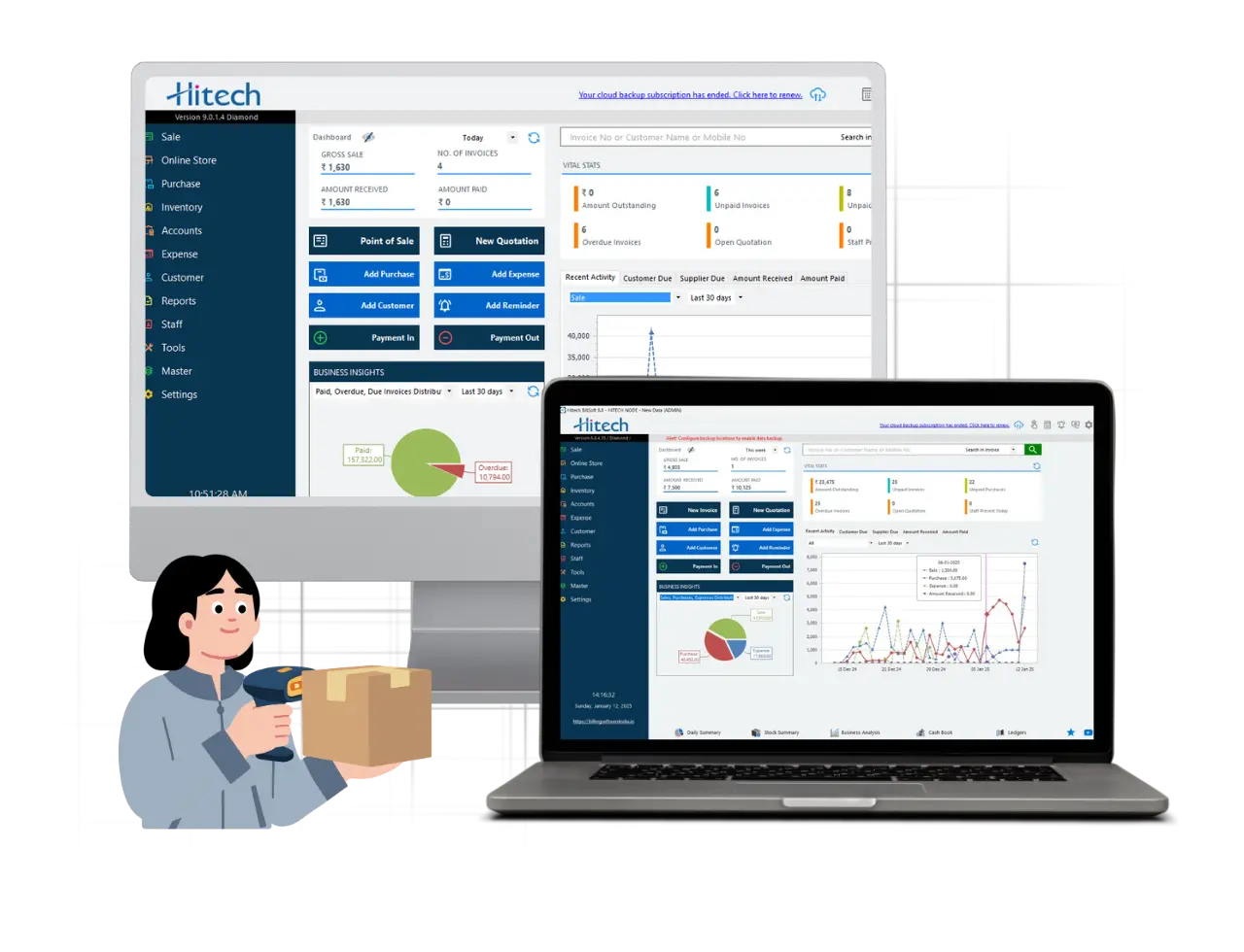
Managing multiple clients, vendors, invoices, and expenses manually can be challenging. GST-compliant billing software like Hitech Billsoft simplifies invoicing, expense tracking, ITC management, client billing, payment tracking, and financial reporting - reducing errors and improving compliance efficiency for event management businesses handling weddings, corporate conferences, exhibitions, or entertainment events.
Event management services in India generally attract GST at 18%, making compliance an important consideration for businesses in this sector. Understanding the correct SAC code, GST treatment, invoicing requirements, and Input Tax Credit eligibility can help event management companies avoid compliance issues while improving profitability.
As businesses grow and handle larger events, maintaining accurate documentation, reconciling expenses, and managing GST filings become increasingly important. By staying informed about GST rules and following proper compliance practices, event management companies can focus more on delivering successful events and less on tax-related challenges.
Join Millions of Business Owners already saving time and
money with Hitech Billsoft.